
Nnena Kalu’s 2025 Turner Prize
Only if institutions move beyond symbolic validation—toward sustained collecting, rigorous criticism, and genuine integration—will this so-called “watershed moment” mark real change rather than a passing gesture.
By Andrew Hunt
Only if institutions move beyond symbolic validation—toward sustained collecting, rigorous criticism, and genuine integration—will this so-called “watershed moment” mark real change rather than a passing gesture.
Andrew Hunt • 2/24/26
-
Roulette is our section for essays, portfolios, videos, conversations, and more that range across a broader purview of culture and politics, not within our current thematic sections. It is, in a sense, a chance encounter with a subject of interest within the extended realm of visual culture.
In this essay, Andrew Hunt follows up on his previous piece to consider whether Nnena Kalu’s 2025 Turner Prize win marks a genuine transformation in contemporary art or a temporary institutional gesture. Situating the award within decades of grassroots advocacy for learning-disabled artists, Hunt contrasts critical responses—from Adrian Searle’s aesthetic praise to Waldemar Januszczak’s accusations of “virtue-signaling”—while highlighting more nuanced curatorial perspectives that call for careful, non-instrumentalizing approaches to disability in art. He challenges the widespread framing of the moment as a “watershed,” arguing that meaningful change depends not on symbolic validation by institutions such as Tate Britain but on sustained commitments to collecting, critical evaluation, and integration into art history. Ultimately, Hunt calls for the development of a new critical language capable of recognizing disability as vital context without collapsing artistic judgment into either tokenism or erasure.
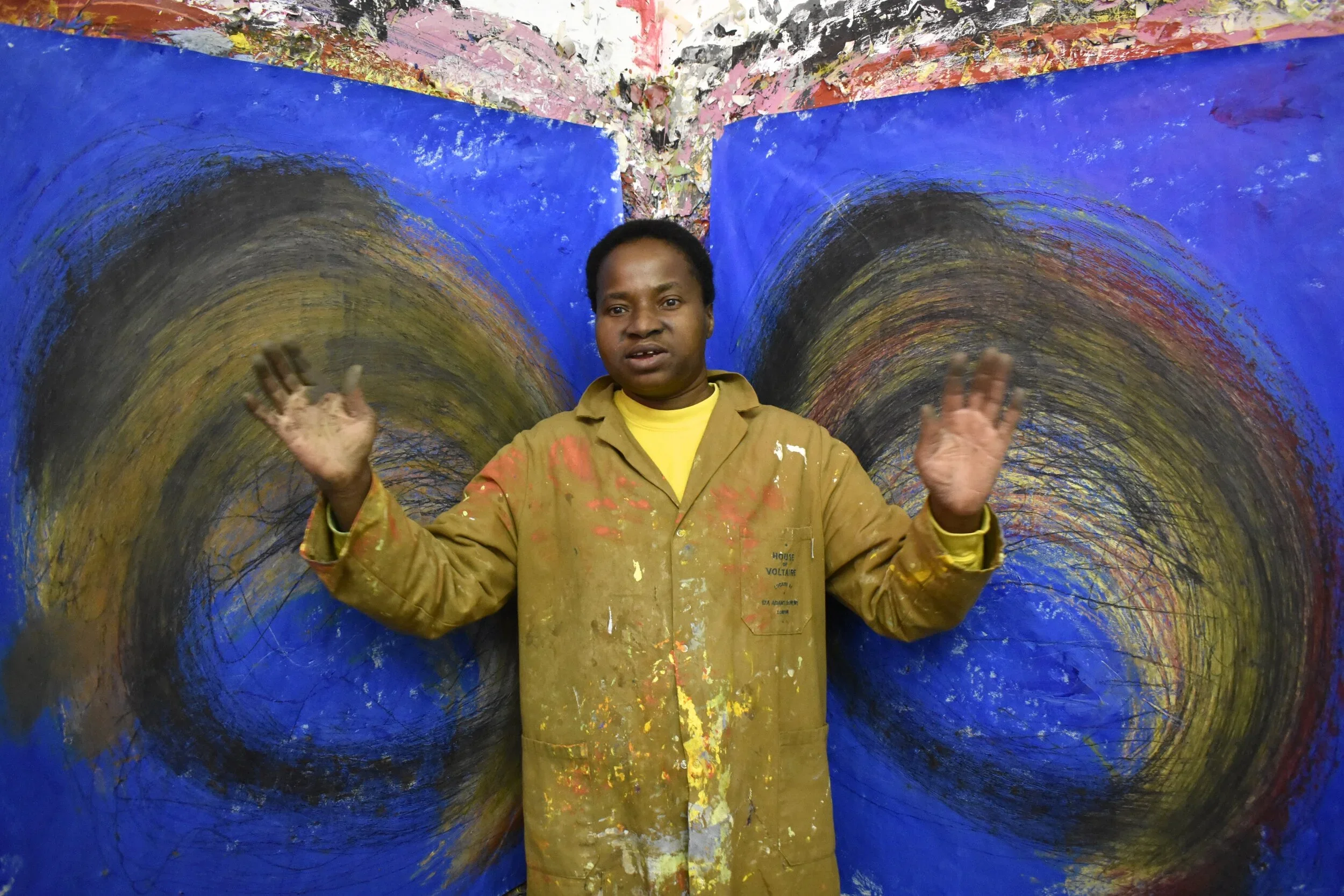
Nnena Kalu in the studio with works from her series of Vortex Drawings. Courtesy the artist and ActionSpace.
Following my piece for The Curatorial, published in September 2025 and titled “On Curating the Art of the Learning-Disabled and Neurodiverse: A Manifesto,” I was invited to write a response to Nnena Kalu’s Turner Prize win on December 9, 2025.1 Rather than provide an immediate reaction or bulletin-like statement, I decided to process possible future trajectories for the development of the art of the learning disabled, especially given the range of reactions, both prior to and after the announcement of the prize. These reactions roundly, and perhaps slightly exaggeratedly, described the prize as a historic moment or “watershed” by journalists and museum directors.2 At the same time, this text provides an opportunity to extend the spirit of the initial piece, which aimed at setting a scene for a range of activist, curatorial, and museological formulas that might continue to incorporate learning-disabled art into mainstream discourse, with and without differentiation from the work of other artistic producers, and to support practical curatorial responses that seek to advance the momentum of this work.
To begin, it’s productive to digest responses to Kalu’s nomination, starting in September 2025, when many journalists began to lobby for Kalu’s work, and continuing through mid-December, when discussions of her win took place, together with where we stand now in early 2026. The British critic Adrian Searle, for example, supported the artist’s work early on. He wrote in The Guardian on September 23, considering all the nominees (which also included Rene Matić, Mohammed Sami, and Zadie Xa), that “everyone has a spiel, but one artist stands out,” and “there’s no fudging. Kalu deserves to win this year’s Turner prize.”3 Searle’s intention is clearly that, beyond the perceived strategies of the other shortlisted artists’ works, Kalu’s sculpture and drawings had a creative impulse that stood apart from any formulaic political agenda or pre-existing academic or identitarian stance, productively and anarchically so. He called Kalu’s form of abstraction “riotous and rhythmic, purposeful and compelling.”
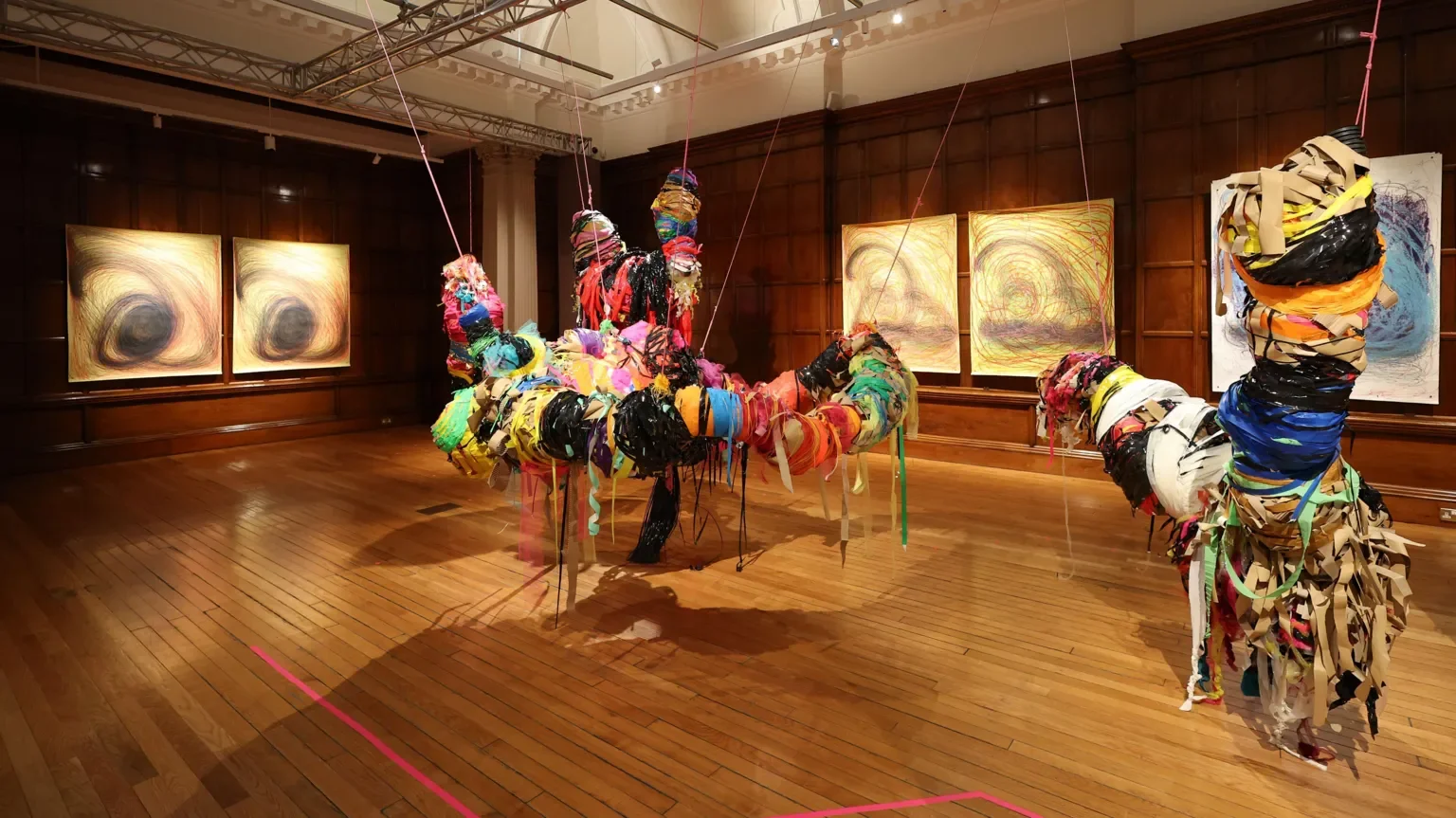
Nnena Kalu’s exhibition at Cartwright Hall Art Gallery, Bradford, UK, 2025. Courtesy EPA Images.
The opposite sentiment was voiced by the critic Waldemar Januszczak, a writer of the same generation as Searle (respectively, they were in born 1954 and 1953) and who has long presented himself as a “bad boy” of art criticism. On October 7, Januszcak wrote in The Sunday Times, that the Turner Prize is “the cockroach of art”—perhaps meaning it’s an established institutional pest that would outlive a nuclear war or alternatively would serve to contain and control any paradigm shift in art and culture. He also pronounced that Kalu’s art was a “sprawling mix of lumpy sculpture,” both disheveled and poorly thought-out artistically and curatorially. After learning from the exhibition text that Kalu was autistic and uses art as a “personal release or therapy,” Januszczak remarked that this raised a dilemma for him, namely whether critics should judge purely on artistic evidence or, like the Turner judges, in his view, be compassionate in broadening what counts as “good art.” Despite his reasoning, it’s not hard to see the innate prejudics in Januszczak’s system of judgment (which may well coincide with populist sentiment), when he concludes that it wasn’t the job of art or the Turner Prize to confuse therapy with talent. In a subsequent Times piece, he criticized the decision as being driven by social politics rather than genuine artistic quality, calling the judges’ choice “virtue-signaling,” and suggesting that compassion or inclusivity might have won out over “tough-minded aesthetic judgment.”4
I’ll come back to look at these perspectives a little later, but keeping the timeline of responses intact for the moment, another piece of interest outside of mainstream newspapers was critic and curator Lisa Slominski’s feature in the London art magazine Art Monthly’s November issue, titled “Curating Difference.”5 Rather than offering praise or a critique of the work—or any form of qualitative perspective—Slominski uses Kalu’s nomination as a starting point to ask deeper questions about how difference, especially neurodiversity and disability, can be represented, contextualized, and interpreted in contemporary art without being reduced to a stereotype or being instrumentalized for other social agendas. In essence, her analysis is rooted in a desire to understand and respect Kalu’s work, and that of others, alongside its context. Rather than reduce criticism to a simple verdict or apply critical judgment, a different criterion is used to ask whether it’s possible to situate Kalu’s art “with care and without instrumentalizing it,” instead of simply celebrating inclusion or forcing aesthetic judgment on the work.
Following the announcement of the prize, the rush to write a newsworthy response included Searle, who reiterated, again in The Guardian, that in his view the judges were correct in affirming Kalu’s work on its own aesthetic merits, which vindicated his position.6 Again, Searle celebrated the physical and sensuous quality of her art, describing it as “embodied” and “sensuous.” He emphasized a deep physical engagement between the artist and her materials, arguing further that it should be appreciated as a powerful and original contribution to contemporary practice.
Perhaps as a response to Januszczak’s claim that the work seen in the gallery in the city of Bradford looked poorly thought out, Searle described the same experience as an “almost alien unknowable presence.” He went on to claim that “the closer you get to Kalu’s endless sinewy trails of old VHS tape, their spews of filigree plastic webbing, their bound-up, sometimes cable-tied suturings, the harder it is to know where their forms stop and the space around them begins.” In my view, this is the closest that any mainstream critic has come to describing what is revelatory about this work: an attempt to start a shift in critical thinking on what makes the work work, outside of standard platitudes or reductive dismissals.
Numerous other responses (including, again, two more in The Guardian, such as the following excerpt from Lanre Bakare) emphasized the director of Tate Britain and chair of the jury Alex Farquharson’s claim that the award, as previously mentioned, represented a “watershed moment” for the international art world. Kalu’s win, he wrote “begins to erase that border between the neurotypical and neurodiverse artist. You suddenly become aware that actually it’s been a boundary around our history, and around contemporary art. But that boundary is dissolving.” Bakare goes on: “Nnena’s work was very much selected for its quality, but given she’s a neurodiverse artist, given her verbal communication is limited, she’s someone who previously would have been on the outside.”7
After this point, coverage, opinion, and news abruptly halted, perhaps in part due to Tate director Maria Balshaw’s decision to make public her resignation two days after the Turner Prize announcement on December 11—a fact that obviously took the focus away from Kalu as the organization’s latest headline.
However, what is most interesting in the ongoing narrative around Kalu is to look at a response to the language of inclusion that was part of the critical response, including, again, this notion of a “watershed moment.” That is the precise wording used by critic Eddy Frankel, an early champion of Kalu’s nomination, published in The Guardian on May 19, and then subsequently repeated by Farquharson. An unsigned editorial in The Guardian on December 12 regarding Kalu’s win stated that her work must be accepted on its own artistic terms, noting that “her sculptures and drawings must speak for themselves.”8
Seeing these patterns, we might ask how can we make something meaningful from a phrase such as “watershed moment” and champion the willing dismissal of disability in the judgment of art? What does this mean in the current cultural climate? The axiom “watershed” is a geographical term that describes the origin of a high natural water source: the mountainous area from which a natural lake drains to create new minor tributaries downstream. Although this wasn’t the intention, applying this metaphor to Kalu’s win from Tate’s perspective can read as slightly misplaced. It speaks of the obvious authorization of the institutional backing of the establishment’s Turner Prize, applying a backhanded gravity to the award and its impact on culture. Here, the hierarchical watershed from above, the lake of “major” institutional consensus and validation that pours down, purportedly nourishes and enriches the great unwashed of public consciousness. This exaggerated sense of importance is weighty with arrogance and touches both the relevance of Tate and of the Turner Prize. In reality, the entire system of support for learning-disabled art has come from the slow and sustained support of “minor” grassroots organizations, initiated in the early 1970s and only recently starting to gain force. This is the reality of the flow of any watershed, one that has trickled down slowly over decades to be finally acknowledged by the cultural elite, often too careful of their reputational profile, and rarely straying outside of critical and market consensus.
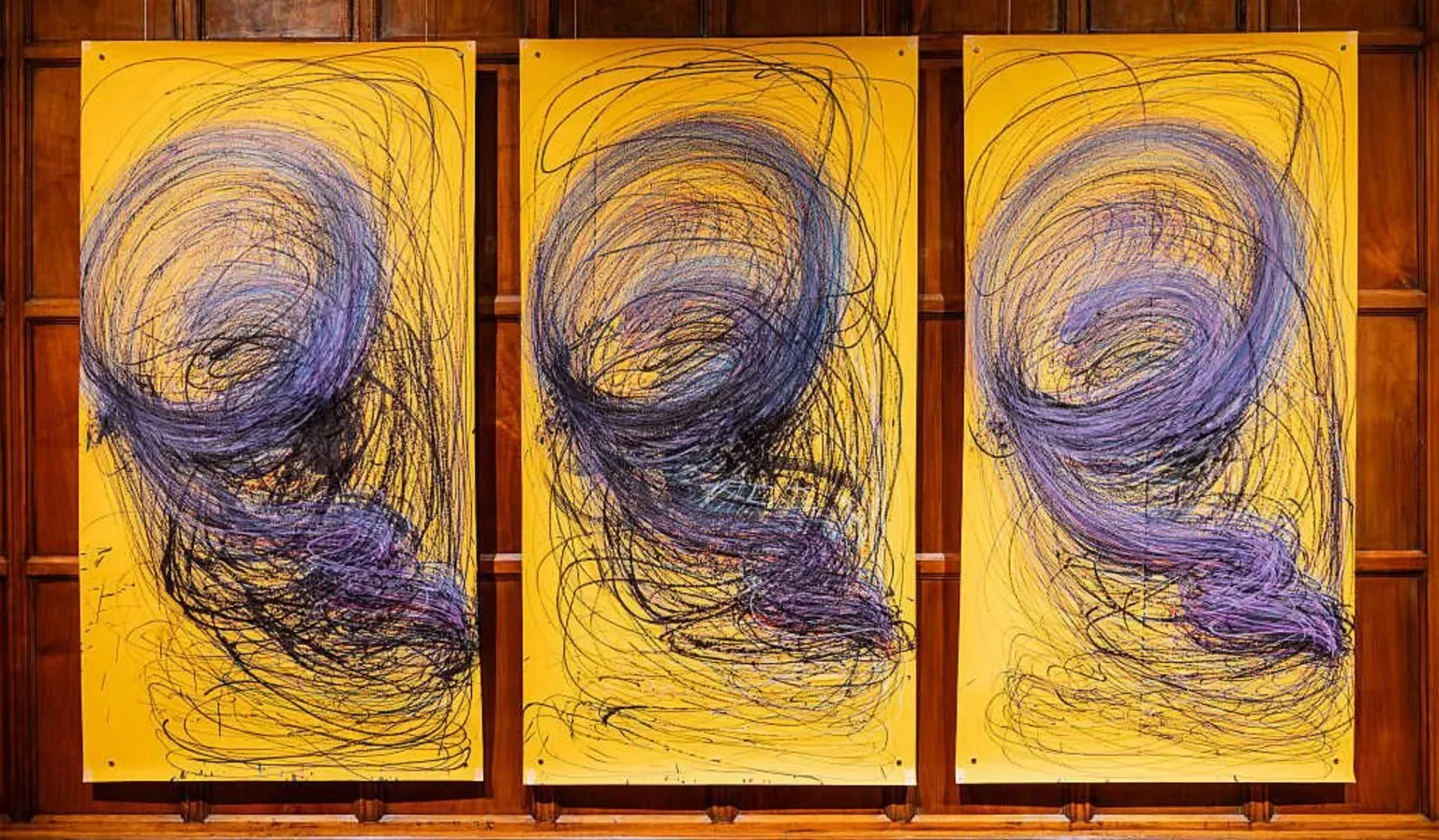
Nnena Kalu’s exhibition at Cartwright Hall Art Gallery, Bradford, UK, 2025. Courtesy Getty Images.
Of course, the story of museums playing catch-up isn’t new, and perhaps what is exciting about Kalu’s exemplary institutional recognition is that hierarchies might be beginning to change. An optimistic view is that supported studios and museums might work together more actively and consistently to create this perceived consensus on learning-disabled art. This would be a real watershed.
As mentioned in my previous piece, the two issues of central importance and urgency are not only the active collecting by museums of learning-disabled work but also the ability to develop a critical language that works in tandem with policies for acquisitions. In terms of the former, two examples of recent museum acceptance of learning-disabled artists (which I strongly suggest paved the way for Tate’s decision to award Kalu the prize) were, as I mentioned in my first piece, SFMOMA’s decision to acquire a large selection of work by Creative Growth in 2024, as well as NIAD’s Marlon Mullen’s solo exhibition at MoMA in New York last year. The increasing inclusion of the Bay Area organizations’ artists by museums over the past few years has acted as a barometer, and it’s worth citing an interview with Tom di Maria, the outgoing director of Creative Growth on the acquisition by SFMOMA, alongside excerpts from another interview I did with him on August 8, 2024.
In the following passage, we can see an existing formula for understanding the perceived importance of this extended moment, alongside how we might measure it and how we might support its development.9
Andrew Hunt: How important do you think this moment is, not only for the Bay Area and its audiences, but also for shaping future perspectives on equality in art and museum collections globally?
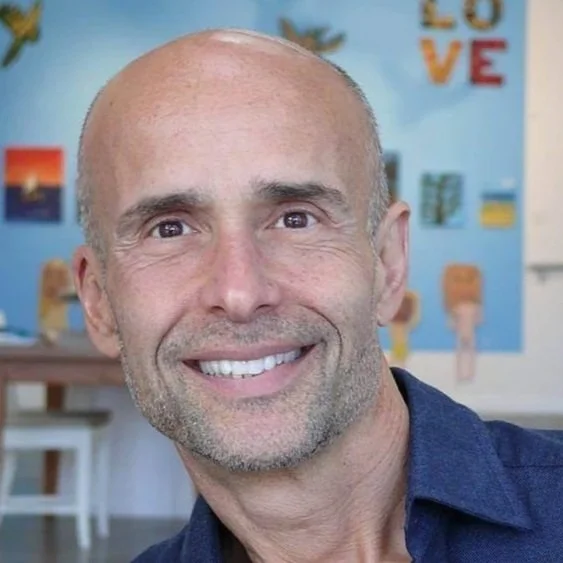
Tom di Maria: I do think this represents a tipping point, a cultural shift in how artists with disabilities are included. The question for me is whether this is something that becomes momentary or fashionable, something that has its moment for a year or two and then fades, like NFTs, for example, or whether it marks a lasting change in the narrative arc of art history. I don’t know the answer yet. But I do believe there’s no going back to how things were before. And that is a historic demarcation.
Despite the fact that, as di Maria states, it’s difficult to see if we’re within a defining moment for learning-disabled art, what is clear is that we need to avoid any lapse in focus in order to keep momentum through a clearly articulated strategy of support, including collaborative work with studios, commercial spaces, and large-scale institutions. Again, what isn’t so straightforward is the critical development of the work: to see it as a genre with discreet differences, and to create an embryonic yet sophisticated evaluative set of criteria that responds to the intelligence of the work alongside its progression over time. With regard to this, it’s worth quoting di Maria again in terms of his and SFMOMA’s practical curatorial strategy for their Creative Growth show:
TdM: One principle quickly became central: respect for artistic practice. In discussions around art and disability, there’s often a negative stereotype: that artists are “one-trick ponies,” that they don’t evolve, that anyone could learn to do one thing. We wanted to counter that directly. So, we focused on showing the evolution of an artist’s work, which meant looking at suites of works rather than isolated pieces.
Moreover, the idea of actively acknowledging artists with disability, with and without distinction, is paramount:
AH: You also talk about the need to level distinctions and labels—self-taught, professional, disabled, outsider—and to resist viewing these artists through any kind of reductive lens. Ideally, they would simply be seen as artists, operating on the same playing field as anyone else. How do you think that kind of leveling can happen in a genuinely progressive way? And what do you see as the current challenges for the arts and disability movement?
TdM: One of the central challenges is bringing the voice of disability fully into the dialogue. That’s complicated, because in some ways it’s about putting ourselves out of business. You want the work to be seen as equal and contemporary, without qualifiers, but at the same time, you can’t entirely step away from the culture of disability that informs the work. So, the question becomes: How do we hold those two positions at once? How do we navigate viewpoints that can seem almost in opposition to each other? Where is the intersection? I think that tension is the challenge, but it’s also what makes the moment exciting. I actually think that’s the future of the field.
This aim of critical evaluation and qualitative judgments to hold “two positions at once” becomes vital in terms of changing critical perceptions around value, and it addresses Januszczak’s apparent inability to form a pluralistic viewpoint alongside other critics’ disinclination to make disability a meaningful context for judgment.10 It’s clear that Kalu’s work differs radically, both formally and aesthetically in philosophical terms, from the other nominated artists in 2025. Yet, to this point, new critical and curatorial ways to address such work needs to be found. What we need to develop is a way to analyze these artistic practices both synchronically, addressing where we are now, as we are currently attempting to do by hitting the pause button, and diachronically: producing a deep form of looking in tandem with the development of the work of artists over time, as di Maria suggests.
Instead of resorting to the ongoing legacy of ironic postmodernism, in relation to the production of work and its interpretation and critical reception, we need a new process that isn’t grounded in something already intellectualized, something pre-formed. Perhaps, any critical interpretation must begin in a more unstructured place, much like the act of making the work, to produce a kind of evaluation that is unexpected, even alien, as Searle suggests, and that subsequently forces a new act of intellection. If one mode of expression and interpretation (the existing professionally trained artist and critic, or those using the legacy of postmodern irony) illustrates intellectual ideas that already exist, the other (learning-disabled and “professionally trained” artists using humor over irony) gives rise to intellectual concepts that might not otherwise have come into being. We may need to develop a new critical language that accommodates the legacy of a critical vocabulary, while making room for considerations fitting this art more specifically. That language doesn’t exist yet.
Of course, this is true for all new movements of art in the past; every conceivable art has spawned a new language to describe it. Perhaps the difference now, however, is that there is very little really new critical language that offers any accommodation to radically different work, certainly when it comes to a nuanced critical approach to learning-disabled art. Perhaps this is inflected by the hangover of postmodernism, which never rose above the shallowness of its form of irony, glibly trading in hollow differences. And so, to hold two positions in the mind at once is not easily accomplished by critical vocabularies that are used to this shallowness, to stylistic surfaces alone, while remaining limited in processing something more profoundly dialectical.
In terms of the practical side of addressing these complex positions critically and curatorially, Christopher Bedford, the director of the San Francisco Museum of Modern Art, who was instrumental in collecting Creative Growth’s work, speaks of siloing and integration.
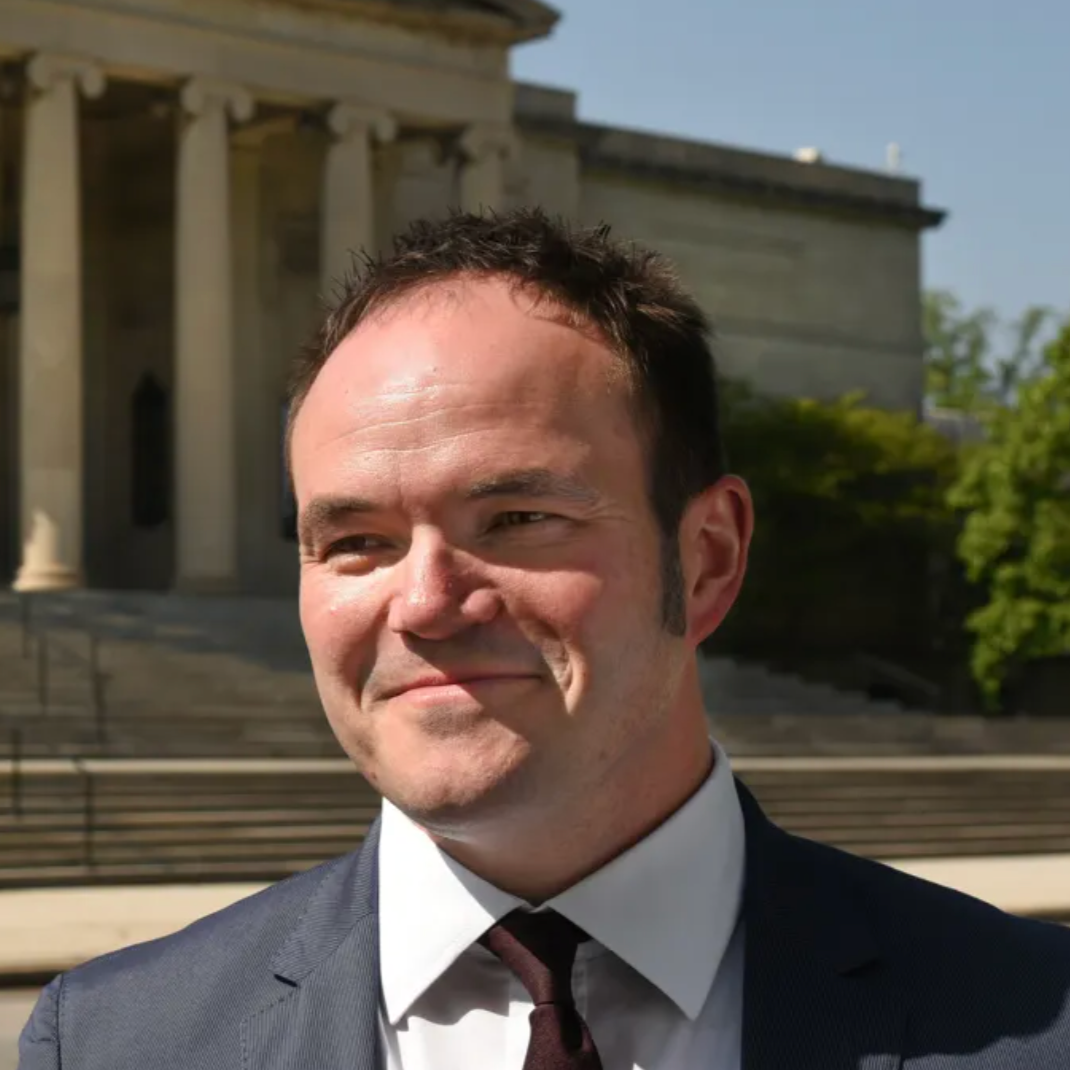
Christopher Bedford: Siloing creates an intensity of attention. It forces a reckoning. Only after that first act can the second act take place, which is genuine integration into a broader art-historical narrative. Applied to Creative Growth, it would have been far too slight a gesture for us to acquire a single strong painting by an artist with disabilities and hang it quietly next to a Jackson Pollock, hoping that the juxtaposition alone would do the work. No one would have noticed. Instead, this was an intentional act of concentration, of insistence. It compels attention. The second act, which is already underway, is integration: weaving this history into the larger fabric of formal, social, and political art histories. But without that initial moment of focus—of forceful visibility—you never reach that point.
With concentrated strategies such as this, there’s reason to be optimistic about the expanding plurality of art. In terms of a perception of 2025’s Turner Prize award being simply that year’s fashionable choice, to stop this from becoming a reality, we need to actively support learning-disabled art from all sides. Will things go back to business as usual? Only time will tell.
NOTES
1. Andrew Hunt, “On Curating the Art of the Learning-Disabled and Neurodiverse: A Manifesto,” The Curatorial, September 1, 2025. https://www.thecuratorial.net/index/roulette/on-curating-learning-disabled-and-neurodiverse-art
2. Eddy Frankel, a journalist for The Guardian, and Alex Farquarson, Director of Tate Britain and Chair of the 2025 Turner Prize, used the phrase “watershed moment” to describe Kalu’s original nomination and subsequent award of the Turner Prize. Frankel referred to Kalu’s initial nomination as “a watershed moment for art” in his piece “Her need to make is off the scale: why Nnena Kalu’s Turner prize nomination is a watershed moment for art” on May 19, 2025, while Lanre Bakare stated in the same newspaper on December 9, 2025, that Farquarson defined the win as a “watershed moment for the international art world” in the piece “Nnena Kalu becomes first artist with a learning disability to win Turner prize,” continuing in its subheading: “Chair of 2025 judging panel says win ‘begins to erase that border between the neurotypical and neurodiverse artist.’” https://www.theguardian.com/artanddesign/2025/may/19/nnena-kalus-turner-prize-watershed-glasgow and https://www.theguardian.com/artanddesign/2025/dec/09/nnena-kalu-first-artist-learning-disability-win-turner-prize
3. Adrian Searle, “Turner prize 2025 review – puzzling banners, tinkling bells, burning landscapes and bum-like sculptures,” The Guardian, September 23, 2025. https://www.theguardian.com/artanddesign/2025/sep/23/turner-prize-2025-review-cartwright-hall-art-gallery-bradford-city-of-culture
4. Waldemar Januszczak, “The Turner Prize is the cockroach of art,” The Sunday Times, September 27, 2025. https://www.thetimes.com/culture/art/article/the-turner-prize-is-the-cockroach-of-art-8sgkb2pjs? gaa_at=eafs&gaa_n=AWEtsqdRckFbo-d1WiR5Bd3WSlBv7Y8xbMazEaPWJpWWgaG92MzBF1t1skLN4iKTS0s%3D&gaa_ts=698dbf91&gaa_sig=J-y0GbN5Yajse075VtbPizw_lzWae5Ksmtsd2eGb6yBwRrUl_SoTJPY1ovi8idF9SejepuqmhbOEhxdLYNx1-w%3D%3D. On December 9, 2025, Januszczak published his judgment of the prize going to Kalu. “Turner prize 2025: Nnena Kalu is first winner with learning disability.” https://www.thetimes.com/culture/art/article/turner-prize-2025-winner-nnena-kalu-0ljqnt6z2
5. Lisa Slominski, “Curating Difference,” Art Monthly, Issue 491, November 2025.
6. Adrian Searle, “Nnena Kalu’s embodied, sensuous art makes her a worthy Turner prize winner,” The Guardian, December 9, 2025. https://www.theguardian.com/artanddesign/2025/dec/09/nnena-kalus-embodied-sensuous-art-worthy-turner-prize-winner
7. Bakare, “Nnena Kalu becomes first artist with a learning disability to win Turner prize.” https://www.theguardian.com/artanddesign/2025/dec/09/nnena-kalu-first-artist-learning-disability-win-turner-prize
8. The Guardian, “The Guardian view on Nnena Kalu’s historic Turner prize win: breaking a glass ceiling,” December 12, 2025. https://www.theguardian.com/commentisfree/2025/dec/12/the-guardian-view-on-nnena-kalus-historic-turner-prize-win-breaking-a-glass-ceiling
9. The following quotations are excerpts from Andrew Hunt’s book, Interviews on Contemporary Painting, forthcoming from Ridinghouse in 2027.
10. Di Maria goes on: “Some people come here [to Creative Growth] already convinced that the work can’t possibly be valuable; that people with disabilities can’t be cultural participants, or that non-academically trained work can’t be intellectually engaging. Others come simply to validate their existing ideas. … But I also don’t want to diminish or denigrate academically trained artists, or the work shown by commercial galleries. That’s not what I’m doing. It’s just not what I personally respond to most strongly. And there are people who don’t respond to what Creative Growth does, and that’s fine too. I think of it a bit like music. Do you listen to hip-hop? Jazz? Classical? If you’ve only ever listened to Beethoven, you may not respond immediately to hip-hop, and that doesn’t mean one is better than the other. Visually, we seem to struggle more with that idea. We don’t always give ourselves permission to like different kinds of work, while simultaneously recognizing that other kinds of work are valuable. For me, it’s about allowing that plurality, about understanding that difference doesn’t require hierarchy.” This is an excerpt from Andrew Hunt’s book, Interviews on Contemporary Painting, forthcoming from Ridinghouse in 2027.
-
Andrew Hunt is a curator and writer. From 2017 to 2025, he was Professor of Fine Art and Curating at Manchester School of Art. He is currently the director of the contemporary art gallery Moon Grove in Manchester, UK. He was previously the founding director of Reading International (in 2016 with Susanne Clausen), director of Spacex, Exeter (2013–2014), and director of Focal Point Gallery, Southend-on-Sea (2008–2013). In 2012, Hunt was a member of the Turner Prize jury. As a curator and artistic director, his research has focused on the ability of new institutions of all sizes to support artists and transform communities. As a writer, he has contributed to many magazines and journals of contemporary art and culture, including Artforum, Art Monthly, The Burlington Magazine, Domus, frieze, Mousse Magazine, Picpus, TATE ETC and The Curatorial.
On Curating the Art of the Learning-Disabled and Neurodiverse: A Manifesto
While works by these artists are slowly entering the mainstream, greater efforts must be made to create inclusivity around the critical and curatorial discourse that enlivens and secures the place of this art now and for posterity.
By Andrew Hunt
While works by these artists are slowly entering the mainstream, greater efforts must be made to create inclusivity around the critical and curatorial discourse that enlivens and secures the place of this art now and for posterity.
Andrew Hunt • 9/1/25
-
Roulette is our section for essays, portfolios, videos, conversations, and more that range across a broader purview of culture and politics, not within our current thematic sections. It is, in a sense, a chance encounter with a subject of interest within the extended realm of visual culture.
In this essay, Andrew Hunt discusses curatorial strategies for the display and collecting of learning-disabled and neurodiverse art in the context of its recent critical reception. The text makes reference to such artists as Nnena Kalu, William Scott, and Marlon Mullen. It addresses the activities of grassroots organizations such as Creative Growth, NIAD, and Creativity Explored in California’s Bay Area; nonprofits such as White Columns, New York, and Studio Voltaire, London; and museums such as Tate, SFMOMA, and MoMA. And it asks: How can a neuro-normative theoretical apparatus comprehend and process learning-disabled and neurodiverse art, which is typically produced outside of foundational art-historical narratives? As well, the essay raises the question: How might we develop an increasingly sophisticated understanding alongside a range of qualitative judgments that intensify and expand ethical forms of curatorial practice? The ambition of the text’s polemics is to devise a long-term strategy for museums to collect the work of these artists, eventually without a nominative distinction from the work of other artists.
Earlier this year, I helped organize a one-day international conference called “Ancestral Avant-Gardes” in Manchester, UK, by the New York-based British art historian and critic Claire Bishop. The proposal was that a new focus on “ancestralism” among visual artists might hark back to traditional, premodern, or Indigenous forms of collective knowledge, which often take the form of ceremonies, rituals, and invocations that focus on the global climate crisis, white supremacy’s systematic oppression of Black and Indigenous life, and the failures of Western rationalism. The event was an open-minded, experimental, performative, art-school affair. This was important, because through its irrepressible presentations, it threw up issues for ideas of identity and class, but also for qualitative judgments of taste connected to authenticity and historical correctness.
Guadalupe Maravilla’s fall 2021–fall 2022 collection gallery exhibition at MoMA, Luz y fuerza (which translates from the Spanish as “Hope and strength”) was given by Bishop as an example of this. Using shrines or altars, the artist transformed the gallery into a healing space that animated Mesoamerican myths, Salvadoran traditions, and Maravilla’s experience as a refugee fleeing civil war. Bishop’s interest was in the artist’s ability to create a feeling of well-being and simultaneously rouse suspicions of fakery. One of Maravilla’s props, for instance, was a vibrating triangular device that he held above his participants’ heads to offer them a form of psychic balance. He later admitted to Bishop that, rather than being an ancient therapeutic device, it was a mass-produced object purchased on eBay. Her interest in the tension between the subsequent disregard that many curator peers had voiced for Maravilla, and the fact that for Bishop the performance had worked, was the interesting issue—together, of course, with the fact that most curators desperately wanted to believe that Maravilla was for real. One question seemed to be: Might the artist be a trickster, poking fun at a mainly white normative liberal establishment’s desire for shamanic authenticity?
Curating Without Distinctions
The question of authenticity that Maravilla’s work poses is particularly compelling for curatorial practice and how we might continue with the active dismantling and reassembling of art history. This is especially evident, and polarizing, in curatorial projects connected to the increasing presentation of work by artists with learning disabilities. I wouldn’t dare suggest that there is a similar question of strategic authenticity connected to neurodiverse artists or those with developmental disabilities and what we see in Maravilla’s productions. Yet, there is an innate assumption made by cultural organizations to be considered. On the one hand, there is a strategy to display works of art without any distinction regarding “professionally trained” contemporary artists. On the other, self-taught, neurodiverse autodidacts are often presented as an “authentic” corrective to social inequality, and as a leveler for the perceived arrogance of the academy. One position that is clearly missing, over any real or imagined equality or authenticity, is how curators, and in turn critics, might access a toolkit—outside of standard taste acquired with formal training in art—to enable them to apply qualitative judgments of this work without fear of being scolded. After all, there is little substantiation of arguments of taste, be they good or bad. At this stage, it’s important to be clear about the meaning of the terms “neurodiverse” and “developmental disability.” The latter is used to describe a group of conditions that impact a person's learning and behavioral development, or language skills, which are usually formed from an early age, and limit one or more major life activities, such as self-care, mobility, or independent living. The former describes a wider field that can include developmental disabilities, yet refers also to disparate neurological conditions, such as autism and ADHD.
Returning to the issue of judgment of this work, two instances of a lack of substantiation occurred in the British national newspaper The Guardian, concerning the 2025 edition of the Turner Prize earlier this year, in which Nnena Kalu, an artist with autism, was one of the four artists nominated for the honor. Jonathan Jones, who described the prize as an “irrelevant bourgeois ritual,” and this year’s shortlist as “the soppiest ever,” dismissed Kalu’s “multicolored tangles of streamers and strands [hung in] in poetical arrangements” and ignored the idiosyncrasies of the work and the artist’s neurodiverse background. Instead, he focused on the work’s “post-minimalist,” “found yet handworked” appearance, concluding that it was: “nice, academic, dull.”1

Nenna Kalu at work. Courtesy the artist and Action Space.
This unfounded “bad” review was followed by Eddy Frankel’s glowing piece a few weeks later (again in The Guardian). Titled “Her Need to Make Is Off the Scale: Why Nnena Kalu’s Turner Prize Nomination Is a Watershed Moment for Art,” it chose to concentrate on Kalu’s status as the first learning-disabled artist to be nominated. Aside from her “incredible” drawings, Frankel wrote that “it’s her sculptural installations that have garnered the most attention: huge cocoons made of found fabric and VHS tape, wrapped into massive, tight, twisting, ultra-colorful knots. It was an installation of these heady sculptures at Manifesta 15, a pan-European art biennial held in Barcelona last year, that brought her to the attention of the Turner committee.” He concludes: “This is clearly a watershed moment for arts and disabilities, a total shifting of the traditional art paradigm.”2 There is, however, aside from the usual platitudes around rapturous energy, still very little qualification of why the work works.
I’ll come back to this need to acknowledge a more nuanced approach on a critical and curatorial level. However, it’s important to mention a change in momentum in showing neurodiverse and learning-disabled artists in the two years since John Chilver, the British artist and critic, and I co-edited an academic journal on the subject, documenting approaches to collecting, curating, and historicizing these tendencies during the previous decade.3 With contributions from Helen Johnson, Helmut Draxler, Daisy Sheff, Barry Schwabsky, Robert Garnett, and others, it surveyed the terrain as it appeared at the time. What remains fundamental are the curatorial strategies of well-established grassroots organizations for promoting artists with developmental disabilities, and how these are starting to bear fruit with work being shown and collected by museums and cultural institutions.
Recent high-profile examples range from the ongoing persistence of curated activity through supported studios that initially emerged in California’s Bay Area in the early 1970s, such as Creative Growth, NIAD (originally National Institute of Art & Disabilities, now known as Nurturing Independence Through Artistic Development), and Creativity Explored, as well as organizations such as London’s Action Space, Venture Arts in Manchester, and Studio A and Arts Project, respectively in St Leonards and Melbourne, Australia. The nonprofits White Columns in New York and Studio Voltaire in London continue to include a strong presence of artists with developmental disabilities and partner with supported studios. These activities have led to an increased awareness in the institutional mainstream, with exhibitions such as Dan Miller from Creative Growth’s inclusion in the Venice Biennale in 2017; Project Art Works’ inclusion in the Turner Prize at Tate in 2021 and in documenta in 2022; and SFMOMA’s Creative Growth survey exhibition in 2024, celebrating the latter’s fiftieth anniversary; and the solo “Projects” show at MoMA in early 2025. SFMOMA also made a groundbreaking acquisition of a large part of Creative Growth’s archive and works by its artists. As well, at the end of 2024, Venture Arts helped Barry Finan to receive a three-year Hamlyn Award to support his work, one of the most valuable of its kind in the UK.

Installation view, Creative Growth: The House That Art Built, April 6–October 6, 2024, SFMOMA. Courtesy Creative Growth and SFMOMA.

Barry Finan. Courtesy the artist and Venture Arts.
So, yes, maybe we are in a transitional moment, historically speaking. Time, of course, will tell. What we can be sure of is that if we are to continue this momentum, we urgently need an increased curatorial sophistication and a broader set of critical apparatus to help accomplish this curatorial work. Any “watershed” moment has been progressing slowly, since the early 1970s, in any case, when supported studios were first formed to take those with learning disabilities out of permanent incarceration and provide them with creative opportunities. A distinct history, internal logic, set of rules, and validating structures has developed since that time. However, these have remained somewhat discreet to their origins, leading to limitations in the broader critical evaluation I suggest is necessary, whether from museum curators and mainstream journalism, or from the specialist perspective of academia. So often we have a focus on “the need to make,” a nonlinguistic, ahistorical focus that avoids connecting developmental disability with more complex qualitative judgments and historical precedents aside from simple image-making per se.
Going back to what we might term a form of unsubstantiated positivity, the headline for Jonathan Griffin’s review of Mullen’s MoMA exhibition in The New York Times read, “With This MoMA Artist, the Painting Does the Talking.”4 What, for example, is the work “saying” when it’s “doing the talking”? We’re simply left to guess. Mullen, who works with NIAD in Berkeley, has been making reproductions of the covers of Artforum issues donated to the art center for years, which I interpret as providing homage to a world he desires to become a part of, but until recently hadn’t had the support to do so. It’s also my conjecture that this work simultaneously reads as a vivid critique of the power structures of contemporary art, alongside a neurodiverse reflection on professional criticism, publishing, and commercial discourse. Similar to the British painter Simon Linke’s strict depictions of the same subject, minus the deadpan delivery, Mullen’s works contain a jubilant, judicious twist that comes from a perspective that, while not malicious, naturally attacks normative irony. Meanwhile, I would agree that Kalu’s sculpture refers to the Postminimalism Jones mentions—in my view, that of the South American installation of Lygia Pape, and also to Judith Scott’s wound sculpture, which has started to become foundational in the narrative of art by artists with learning disabilities. Similarly, Kalu’s semi-automatic circular drawings have an affinity with Miller’s, which in turn show a strong link with Cy Twombly’s paintings, who once wrote that the act of painting could come out of “one ecstatic impulse.”5 The northern English vernacular of Finan’s text-works, meanwhile, links with the reflexive conceptual language-based work of Terry Atkinson and Art and Language. It’s trying to determine the differences in these kinds of impulses to create a productive synthesis that matters.

Marlon Mullen, Untitled, 2017 (acrylic on canvas, 30 1/4 x 30 1/4 inches / 76.8 x 76.8 cm). 1 The Museum of Modern Art, New York. Gift of AC Hudgins. © 2024 Marlon Mullen; Artforum, January 2017: Kerry James Marshall, Untitled (detail), 2008 (acrylic on PVC panel, 72 3/4 × 61 1/4 inches). Courtesy Artforum.
It’s inevitable that works by learning-disabled artists are in dialogue with modern and postmodern art-historical canons, as well as with contemporary artists working today, firstly in terms of their own readings, and then with projected connections made by normative critics. The question is: How do we triangulate, synthesize, and reconcile these readings by artists and normative critics to form a new inclusive language? I would suggest that we need ongoing discussions to provide the possibility for an increased fluency in a horizontal, non-hierarchical discourse. Otherwise, artists with developmental disabilities will continue to be sidelined. Of course, this begs another question: Do artists such as Mullen really want to break into the mainstream anyway? While the answer may be yes, many artists still want to eschew the dominant critical system, so we need to integrate these positions.
Pushing Curating and Criticism
In essence, we appear to be stuck in a present of curatorial enthusiasm yet critical reserve. For example, White Columns’s pioneering exhibitions with William Scott in 2006 and 2009, Nicole Storm in 2021, and Camille Holvoet in 2023, as well as Studio Voltaire’s project with Scott in 2021-2022, celebrate and contextualize artists accurately. They do this with the usual hope that critics will complete the job—which rarely happens, the occasional exemplary exception notwithstanding. The result is that major institutions usually reproduce these messages when they come to show the same artists.

Nicole Storm. Courtesy the artist and Creative Growth.

William Scott in front of his work at Creative Growth’s stand, Independent Art Fair, 2021. Courtesy the artist and Creative Growth.
What might be reasonable and groundbreaking would be to form a global advisory group, consisting of directors and artists from supported studios, non-profits, connected cultural activists, and interested parties such as critics, art historians, academics, curators, collectors, and museum directors to lobby for museum acquisitions. This might also lead to a sustained dialogue to develop momentum on both practice and theory. Although this might sound wildly bureaucratic, developing a series of academic bids to explore the benefits of what we might call a “new institutionalism” around collecting and promoting neurodiverse art, combined with social justice and research on appropriate aesthetic theories—in general, the dominant post-Kantian route of disinterested judgment via Adorno, and those opposing Western Enlightenment tendencies with an eye toward disability—could be extremely productive. With no coherent network or joined-up strategy to unite the activities of supported studios across the world, the knowledge gap filled by this research would be significant. Symposia, conferences, and publications of findings with theoretical and art-historical underpinnings on the subject would be a key component of this body to progress qualitative analysis and judgment on the work itself.
Medicaid and PIP
With proposed cuts to welfare in the US (Medicaid) and the UK (PIP, which stands for Personal Independence Payments) soon to affect disabled people of all kinds, which effectively attacks the most disadvantaged in society, what makes the proposed strategy particularly urgent is that we might articulate future policy and infrastructure coherently, if and when it ever becomes economically and politically viable to government. Trump’s cuts to Medicaid are vindictive; however, the Labour Party’s similarly cruel attitude toward disability benefits in the UK is even more alarming, as they are traditionally the party of the working people. As I write, a major rebellion by Labour MPs has led to a U-turn on their Dickensian cuts to PIP. This was the biggest proposed cut to disability benefits on record, an attempt to save the state £5 billion. Labour’s latest claim after the reversal of their decision is that they are a “government that listens” and cares about “human dignity.” If this is the case, then we need to provide them with an alternative vision.
A Manifesto
It is extremely difficult to separate equality and justice from a discrete theory or set of values with which to evaluate work by artists with disabilities. Attempts at a disinterested, noninstrumental judgment in this contemporary context are fraught with problems, such as the obvious elephant in the room, namely, the critical establishment’s control of communication and interaction, which even with the best will in the world, can provide negative sanctions that enforce normative critical and curatorial behaviour. However, an approach to curating and criticism in which the artist’s backstory is considered alongside their work rather than as the main act, and avoids engendering self-censorship—or a system that eschews one being prioritized over the other—is one way forward. A simple reflection on the hierarchies of critical judgment, as we see in e-flux’s editorial from July 2 of this year, titled “Theory and Practice,” also provides a horizontal approach to power, neutral in its evaluation of artistic accomplishment and its sources.6 If, as the editors state, theory is a “systematized body of knowledge organized according to a set of internally coherent logics,” it should not simply be owned by powerful centers such as the academy. “To make art in an indigenous tradition, for example, is not to work ‘outside’ of theory but within a different set of rules and validating structures.” It isn’t much of a jump to map this onto work by neurodiverse artists of all kinds, whose traditions have their own rules and contemporary systems of logic that at once upend foundational narratives of modern and contemporary art and reflect on some of the most urgent concerns in our culture.
For example, after the mid-twentieth century tradition of Dubuffet and the Prinzhorn Collection, the work coming from supported studios since the 1970s reflects something distinctly different from its traditional predecessor.7 If Adorno once said: “Everything that has ever been called folk art has always reflected domination”—meaning of course that folk art and the self-taught is made partly in response to mainstream oppression in everyday life, as well as culture—then we can apply this to both categories of “outsider” and “learning disabled.”8 Yet, it’s the latter that is increasingly sophisticated and goes beyond a mere response to authority or a rapturous alternative language that confounds normal sense and interpretation. Instead, it contains a knowing intelligence and confidence that undermines conceptual strategic positions developed since the mid-1960s, including institutional critique and socially engaged art. In fact, one could even describe learning-disabled art as fifth-generation institutional critique because it reveals innate prejudices of the contemporary art establishment. In this sense, critics are confronted with this work in much the same way as the young academic in The Innocent Anthropologist, a factual account of how a researcher undertaking fieldwork in Cameroon was tricked into false assumptions by locals wise to his Western perceptions of objectivity; a story similar to Bishop’s experience with Maravilla described earlier.9
If conventional art theory, especially that based in academic institutions—including art schools, art history departments, and curating courses—cannot formulate a coherent system of analysis, we need to educate those institutions as well as those in government so that a reasonable and coherent system of understanding is developed.
One practical example that presents a direct path from grassroots organizations to museums is SFMOMA’s decision under the leadership of Christopher Bedford, previously noted, to acquire archival material and over a hundred works by Creative Growth with the intention to bring it to the attention of the public today and for posterity. Bedford’s custodial approach is that any historical and theoretical sophistication connected to qualitative judgments will take place, as is traditional, over a long period connected to the practical matters of collecting. This is a contemporary version of Alfred Barr’s famous diagram of his “torpedo in time,” from his 1933 “Report on the ‘Permanent Collection,’” written for MoMA. When I interviewed Bedford last summer, he mentioned three important elements to this strategy:
Short-term: To collect work by neurodiverse artists and those in supported studios—initially with distinction from other contemporary genres—in part with an activist impulse to rewrite art-historical narratives and to initiate a new category of contemporary art.
Mid-term: To consolidate collecting work by neurodiverse artists with the aim that, over time, this will promote a growing and sophisticated critical understanding and distinction of this genre alongside “normative” forms of contemporary art.
Long-term: To underscore the conscious, active, positive collecting of work by artists with disabilities in order to erode the distinctions between abled and disabled, and professional and self-taught, and with the idea that genres such as Postminimal, Conceptual, Folk, Outsider, Learning Disabled and Neurodiverse can be increasingly and productively interwoven—a situation in which work by artists with disabilities will be seen equivalently with others.
To Conclude: Humor, Provocation, and Action
With his usual provocative humor, Jerry Saltz suggested a few years ago, during a talk in Chicago, that all major museums should only show work by Black and women artists for a period of five years, simply to see what might happen.10 After that, he said, they could go back to presenting work by white men with average talent. Adding artists with disabilities to Saltz’s list would hardly be inappropriate and might well instigate a productive discussion. Saltz’s point, of course, is the same as Bedford’s: we must actively push for inclusion of neurodiverse artists in criticism, curating, and art-historical discourse at the highest level. On this subject, it was announced on July 8 of this year that Kate Adams, artist, CEO, and co-founder of Project Artworks, was joining England’s Arts Council collections acquisitions committee. What we need are similar appointments across the board in major collecting institutions, as well as experts in university art school departments.

Kate Adams. Courtesy the artist and Project Art Works.
Although for many cultural activists, there has always been little trust in museums as vehicles for emancipatory struggle—increasingly, for some, they reveal themselves to be among the main administrators of state censorship—we still need to attempt a transition from grassroots organizations’ activities to public cultural institutions. If we really are in a transitional historical moment, aiming at mid- to long-term solutions in the public sector is key, even though we’re in searingly tight times economically. The revelatory work being made is sure to provide energy for the cause. Aside from the vitality and power of this yet-to-be fully articulated genre, Bedford and Tom di Maria (who led Creative Growth for twenty-five years until he retired last year) agree, as should we all, on the fundamental principle that inequalities connected to the work of artists with disabilities are so baked in that the gap is as clear as day and has been for decades. This is an authentic struggle, and there is good reason why we should actively urge people to pursue it.
NOTES
1. Jonathan Jones, “An irrelevant bourgeois ritual: this year’s Turner prize shortlist is the soppiest ever,” The Guardian, April 23, 2025, https://www.theguardian.com/artanddesign/2025/apr/23/turner-prize-shortlist-irrelevant-bourgeois-controversial.
2. Eddy Frankel, “‘Her need to make is off the scale”: why Nnena Kalu’s Turner prize nomination is a watershed moment for art,” The Guardian, May 19, 2025, https://www.theguardian.com/artanddesign/2025/may/19/nnena-kalus-turner-prize-watershed-glasgow.
3. John Chilver and Andrew Hunt (Eds.), Journal of Contemporary Painting, “Minor Painting: Outsiders and Outliers,” volume 8, numbers 1 & 2. Intellect Journals, 2023.
4. Jonathan Griffin, “Marlon Mullen,” The New York Times, December 22, 2024, Section AR, 13.
5. See https://www.tate.org.uk/visit/tate-modern/display/in-the-studio/cy-twombly.
6. The Editors, “Theory and Practice,” e-flux Criticism, July 2, 2025, https://www.e-flux.com/criticism/6782282/theory-and-practice.
7. The Prinzhorn Collection, housed at the Heidelberg University Hospital in Germany, holds approximately 32,000 works today by neurodiverse artists. Its original collection of about 6,000 works was largely formed by art historian and psychiatrist Hans Prinzhorn (1886–1933) during the 1920s, and continued afterward, with pieces from 1840 to 1940 created by inmates of psychiatric institutions.
8. Theodor W. Adorno, E. F. N. Jephcott, Minima Moralia: Reflections on a Damaged Life (London: Verso, 2005), 204.
9. Nigel Barley, The Innocent Anthropologist: Notes from a Mud Hut (London: Penguin, 1986).
10. Jerry Saltz, “The Art World Problem,” talk, The Art Institute of Chicago, December 5, 2018, https://www.youtube.com/watch?v=5if4g7F5pnI.
-
Andrew Hunt is a curator and writer. From 2017 to 2025, he was Professor of Fine Art and Curating at Manchester School of Art. He is currently the director of the contemporary art gallery Moon Grove in Manchester, UK. He was previously the founding director of Reading International (in 2016 with Susanne Clausen), director of Spacex, Exeter (2013–2014), and director of Focal Point Gallery, Southend-on-Sea (2008–2013). In 2012, Hunt was a member of the Turner Prize jury. As a curator and artistic director, his research has focused on the ability of new institutions of all sizes to support artists and transform communities. As a writer, he has contributed to many magazines and journals of contemporary art and culture, including Artforum, Art Monthly, The Burlington Magazine, Domus, frieze, Mousse Magazine, Picpus, and TATE ETC.